House Construction Mistakes in Bangalore: 10 Costly Errors and How to Avoid Them
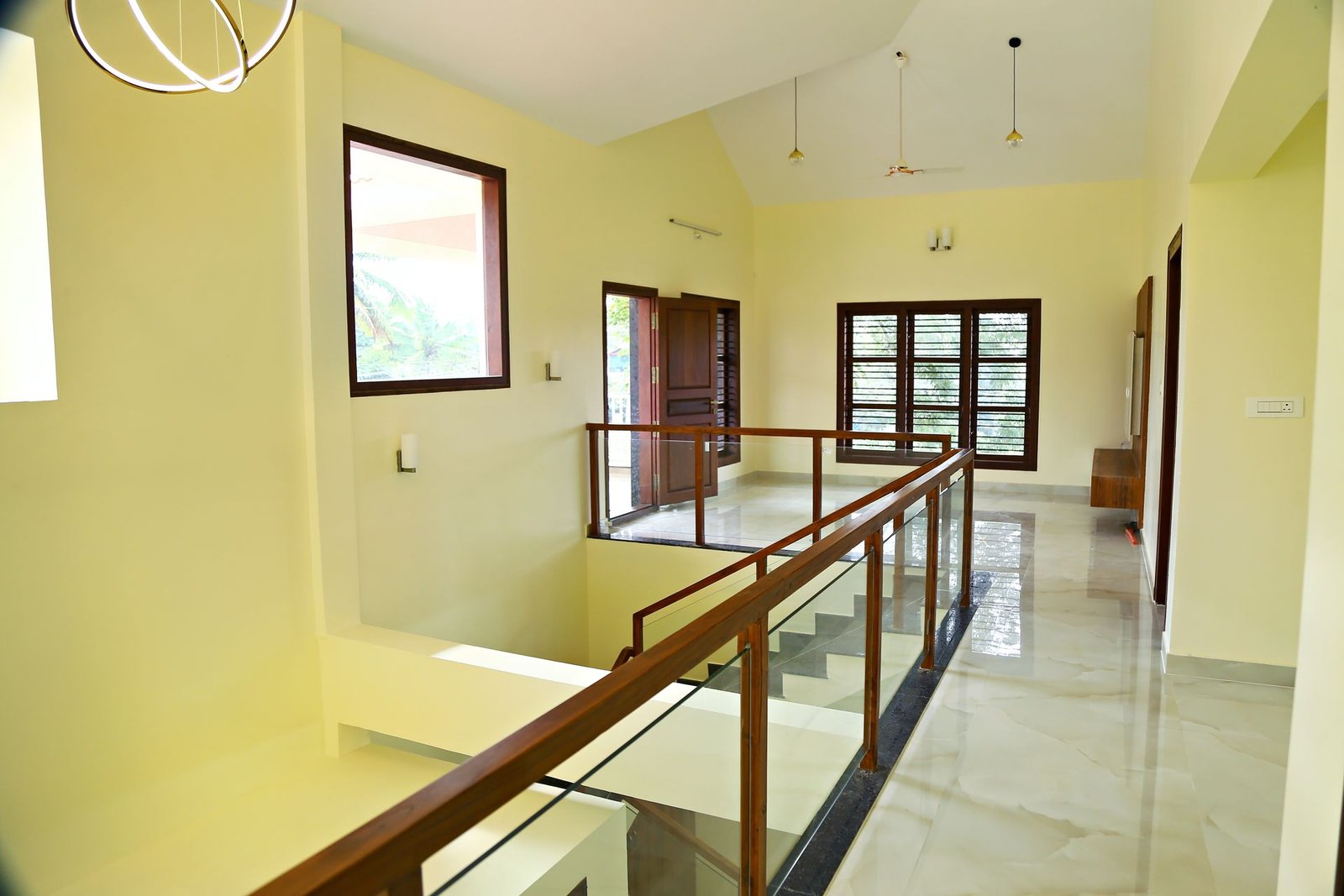
Most house construction mistakes in Bangalore are not caused by bad luck. They happen because a small point was missed early and became big later. This guide lists 10 costly mistakes we see homeowners make, finds the root cause of each one, and gives a practical solution you can use.
Why the same mistakes keep repeating
For most families, building a house is a once-in-a-lifetime event. There is no earlier experience to learn from. They depend on advice from relatives, friends and the builder. Some of that advice is good. Some of it is out of date.
Bengaluru adds its own difficulties. Plot sizes are small, so every sq ft counts. Plan approval rules and setbacks change. Material prices move. Monsoon affects the schedule. A mistake in such a city costs more than in a bigger town.
The good news is that mistakes follow patterns. In factories that follow the Toyota way, the method is simple. When a problem comes, do not blame a person. Ask why it happened, find the root cause, fix that cause, and then check that it stays fixed. This is the cycle of Plan, Do, Check, Act (PDCA). We use the same approach below. For each mistake we show what happens, why it happens, and what to do.
The problem: small misses, big losses
A single mistake can add lakhs to a house or add months to the timeline. Several together can leave a family with a half-finished house and a strained relationship with the builder. Typical losses are:
- Cost growing well beyond the first quote.
- Delay of many months, with rent still being paid.
- Leakage, cracks or poor finish that appear in the first monsoon.
- Legal or approval trouble that affects loans, sale or utility connections.
To solve this, we take each mistake one by one.
Mistake 1: Starting without a sanctioned plan
What happens. The family starts work to save time and hopes to get approval later. The building goes beyond the approved limits, or the authority objects. Utility connections and bank loans get stuck.
Root cause. The family thinks approval is only a formality, and the builder does not explain the risk. Papers are also not ready, so approval is delayed.
Solution. Get the plan sanctioned first and build only as per the sanctioned plan. Keep the sale deed, khata, EC and tax receipts ready. Read our guide on BBMP plan approval in Bangalore. With us, plan approval is handled as part of turnkey, and the approval fees are paid by the owner. Please verify current fees.
Mistake 2: Not checking the plot papers and soil
What happens. A boundary dispute, a khata problem or weak soil is found after construction begins. The foundation design changes, and the cost rises.
Root cause. The plot is checked only by looking at it. The papers are not given to a lawyer, and no soil test is done.
Solution. Ask a lawyer to check the title, EC and khata. Measure the plot against the papers. Do a soil test before the structural design. The cost of a soil test is small compared to the cost of a wrong foundation.
Mistake 3: Choosing the builder on the lowest rate
What happens. A low rate wins the work. Later, "extras" begin: items outside the scope, lower brands, or a change in the specification. The final cost is higher than the competitor's quote.
Root cause. Quotes are compared on the rate per sq ft alone. The specifications are different, and the exclusions are not asked.
Solution. Ask every builder to quote the same plan with the same level of finish. Compare the BOQ line by line. Our guide on top construction companies in Bangalore has a comparison table you can copy.
Mistake 4: Accepting a vague BOQ
What happens. The quote says "good quality material" or "as per site". During work, the builder uses what is cheapest, and the owner has no document to question it.
Root cause. The BOQ is not itemised, and brands and grades are not named. No rupee limit is set for tiles, fittings or doors.
Solution. Insist on an itemised BOQ with brands, grades and allowances. At Matrix Realty, every BOQ names the brands, for example the steel grade (Fe 550D TMT), cement grade and brand, block size, electrical brand and sanitary ware allowance. Whichever builder you pick, ask for the same detail in writing.
Mistake 5: Forgetting the items outside the package rate
What happens. The family plans the budget on the package rate. Then come approval fees, compound wall, gate, sump, borewell, BESCOM and BWSSB charges, interiors and GST. The budget is short by several lakhs.
Root cause. The package rate is taken as the total cost. The list of exclusions is not read.
Solution. Ask for a full list of what is not included and add rough costs for each. Keep a reserve for items you did not plan. For a 30x40 G+1 house of about 2,000 sq ft (an assumed area), the package part comes to approximately ₹38 lakh (Basic), ₹46 lakh (Premium) or ₹54 lakh (Royale), before these extra items and GST. Verify current rates. Use our cost guide and calculator to plan the full budget.
Mistake 6: Changing the design after work has started
What happens. The family sees the walls and decides to move a room, add a window or change the staircase. Breaking and redoing work adds cost and delays the schedule.
Root cause. The design was approved without being understood. Drawings are in 2D, and the owner cannot picture the house.
Solution. Take the time to read the plan room by room. Ask for 3D views. A 3D or VR walkthrough of the design is available from us on request, through a partner service. Approve the final drawings in writing. Make every change before the work reaches that part, and get the cost in writing. See also house planning before construction to save money.
Mistake 7: Paying a big advance and ignoring stages
What happens. A large part of the money goes out in the first weeks. The pace then slows. The owner has no power to ask for speed, and in a bad case the work stops.
Root cause. Payments are not linked to completed work, and the owner trusts the builder without a written schedule.
Solution. Use stage-wise payments. Pay only for completed stages, such as foundation, plinth, each slab, masonry, plastering and finishing. Match every payment with photos and a stage check. This is how we work at Matrix Realty: you pay only for completed stages.
Mistake 8: Skipping quality checks and test reports
What happens. Cracks, seepage or weak concrete appear within a year or two. No one can prove what was used because no record was kept.
Root cause. Quality is judged by looking at the finished wall. There is no site engineer check, and no tests are done on concrete, steel or cement.
Solution. Ask for a site engineer, stage-wise checks and material test reports. Check reinforcement before every pour, take concrete cubes, and keep delivery bills for steel and cement. Do a 48-hour water test for terrace and toilets before tiling. Our 50-point house construction checklist lists every check by stage.
Mistake 9: Not planning for the schedule and the monsoon
What happens. The family expects to move in by a fixed date, such as a festival or a school year. The house is not ready. Rent continues, and the pressure leads to rushed finishing.
Root cause. The timeline is a verbal promise. Approvals, rain and design changes are not counted.
Solution. Ask for a written milestone schedule. We typically quote 8 to 10 months for a G+1 home and 10 to 14 months for a G+2 home, depending on the plot, the design and the approvals. Add a buffer before your move-in date. Plan foundation and slab work with the monsoon in mind. Read our timeline guide.
Mistake 10: Taking the keys without the papers
What happens. The family moves in happily. A year later they need drawings for a repair, an extra floor or a bank loan, and nothing is available. Even a small plumbing leak turns into a search.
Root cause. The handover is treated as the end of the job. No list of documents was agreed at the start.
Solution. Write the handover file in the agreement. It should include the agreement, drawings, BOQ, test reports and handover documents. Collect utility papers, meter details and fitting manuals as well. Do a walk-through with a snag list, and make the last payment only after it is closed.
Quick view: mistake, cause and fix
| Mistake | Root cause | Fix |
|---|---|---|
| 1. No sanctioned plan | Approval seen as a formality | Sanction first, build as sanctioned |
| 2. Unchecked papers and soil | Plot checked by eye only | Lawyer check, soil test |
| 3. Lowest rate wins | Rate-only comparison | Same plan, same specification, BOQ comparison |
| 4. Vague BOQ | No brands, grades or allowances | Itemised BOQ in writing |
| 5. Items outside the rate | Exclusions not read | List exclusions, keep a reserve |
| 6. Late design changes | Drawings not understood | 3D views, written approval |
| 7. Big advance | Payment not linked to work | Stage-wise payments |
| 8. No quality checks | No engineer, no tests | Stage QC, test reports, water test |
| 9. Unrealistic schedule | Verbal promise, no buffer | Written milestones, buffer for rain |
| 10. No papers at handover | Handover list not agreed | Handover file in the agreement |
How to use this list before you sign
Print the table above and take it to your first meeting with every builder. For each row, ask one question: how do you handle this? A clear, written answer is a good sign. A vague answer, or an answer that changes from one meeting to the next, is a warning.
Then take one week to read the BOQ and the agreement at home. Most of the mistakes in this guide can be seen in these two papers before any money is spent. If you cannot understand a line, ask the builder to explain it in simple words. If the explanation does not satisfy you, ask a civil engineer you trust to read it.
Summary
These ten mistakes cost homeowners in Bengaluru lakhs of rupees and many months. None of them needs special knowledge to avoid. They need only paper, patience and the habit of asking why. Use the PDCA cycle. Plan with a clear scope and a sanctioned plan. Do the work in stages. Check each stage with photos and tests. Act early when something is wrong. A builder who welcomes these checks is a builder worth trusting.
If you are still choosing a builder, read how to judge the best house construction company in Bangalore.
Frequently asked questions
What is the most costly house construction mistake in Bangalore?
It depends on the project, but starting without a sanctioned plan and signing a vague BOQ are two of the most costly. Both can lead to extra cost, delay and legal trouble later.
How can I avoid cost overruns?
Ask for an itemised BOQ with brands, a list of what is not included, and stage-wise payments. Keep a reserve for items outside the package rate. Avoid design changes after work begins.
What items are usually not included in a package rate?
In our packages, plan approval fees and statutory charges, compound wall, gate, sump, borewell, BESCOM and BWSSB connection charges, interiors and GST are not included. Always ask any builder for the same list.
How much advance is safe to pay?
There is no fixed number, but a large advance with no link to work is risky. Prefer stage-wise payments, where you pay only for completed stages, written in the agreement.
Is a soil test really needed for a small plot?
Yes. Soil conditions can differ even between nearby plots. A soil test helps the structural engineer design the right foundation. It costs far less than correcting a weak foundation later.
How do I know the concrete and steel are good?
Ask for steel that matches the BOQ grade, such as Fe 550D TMT, keep the delivery bills and take concrete cube test reports. A site engineer should check reinforcement before every pour.
How long should a G+1 house take?
We typically quote 8 to 10 months for a G+1 home and 10 to 14 months for a G+2 home. The time depends on the plot, the design and the approvals. Ask for a written schedule.
Can I fix a mistake after it has happened?
Some can be fixed, such as late payments or missing papers. Others, like a weak foundation or missing sanction, are costly to correct. This is why early checks matter most.